Hidden Gems: Food Carts

While food carts as a concept are a famous fixture in Portland, this Hidden Gem spotlight focuses on getting your brain (and mouth) around your favorite flavor of indie cuisine no matter when and where your belly rumbles.

Food carts, like whales and peas and dolphins, are happiest in pods. This is advantageous because their listed hours often serve as rough sketches. If it’s a sunny day, the cart may stay open later or just close early so the proprietor can play outside too.

Fickle as that may sound, it makes the food cart experience an adventure. On the off-chance you aren’t able to get what you came for, that cart’s podmates will gladly feed you with their offerings. The list below is conveniently divided by location and likely hours of operation to help you get some of this fantastic food in your face!

Featured Carts

Westside
Alder Food Cart Pod (SW 9th & Alder)
Nong’s Khao Man Gai – Mon-Fri – 10a-4p
The Frying Scotsman – Mon-Fri – 11a-4p
Samurai Bento – Mon-Fri – 11a-4p
Grilled Cheese Grill – Sun-Thurs 11a-5p, Fri-Sat 11a-8p


Q19 Food Cart Pod (NW 19th & Quimby)
Sawasdee Thai – Mon-Fri – 9a-3p
The Lunch Box – Mon-Fri – 11a-3p
OMG Oregon Made Grub – Mon-Fri 11a-3p


Eastside
Bundy’s Bagels (1421 SE 33rd) Wed-Fri 6a-3p, Sat 8a-5p, Sun 8a-3p
Potato Champion (1207 SE Hawthorne) – Tues-Wed 4p-1a, Thurs-Fri 4p-3a, Sat 12p-3a, Sun 12p-1a
Angry Unicorn (5205 SE Foster) Tues-Sat – 12:15p-7p
Grilled Cheese Grill (1027 NE Alberta) – Sun-Mon 11:30a-3:30p, Tues-Thurs 11:30a-8p, Fri-Sat 11:30a-2:30a
Los Gorditos (SE 50th & Division) – Mon-Sat 10a-9p
Cartlandia Super Pod (8145 SE 82nd) – 10a-9p

Click here for a full map of Portland’s food cart pods!

Inspiring Home Tours

Have you ever been invited into someone’s home, been given the nickel tour, spotted something fantastic and thought to yourself that you’re definitely copying that when you get home? Maybe it’s a clever storage idea, an accent wall, vintage fixtures in the kitchen, creative furniture placement or a back patio designed for maximum outdoor entertainment. Then the next time you host a dinner party, you can be the one who basks in the praise of your guests.

Beyond bragging rights, you might just add an inspired bit of functionality to your daily living space. Or you may be hankering to get those creative juices flowing for an upcoming remodel. Bigger still, it could be time to migrate to a new home altogether. Heck, even if you’re just looking for something fun to do after brunch, taking a home tour is a solution to all these scenarios.

These thoughtfully curated experiences book up quickly, so select your favorites, buy your tickets (where applicable) and mark your calendar!

Architectural Heritage Center’s Old House Revival Tour – Sat, April 11th – 10am to 4pm

Modern Home Tour (presented by Gray Magazine) – Sat, April 25th – 11am to 5pm

The Ultimate New Home Showcase – Sat & Sun, April 25th & 26th and May 2nd and 3rd – 11am to 5pm

 Restore Oregon’s Mid-Century Modern Tour  – Sat, May 9th – 10am to 4pm

Irvington Home Tour – Sun, May 17th

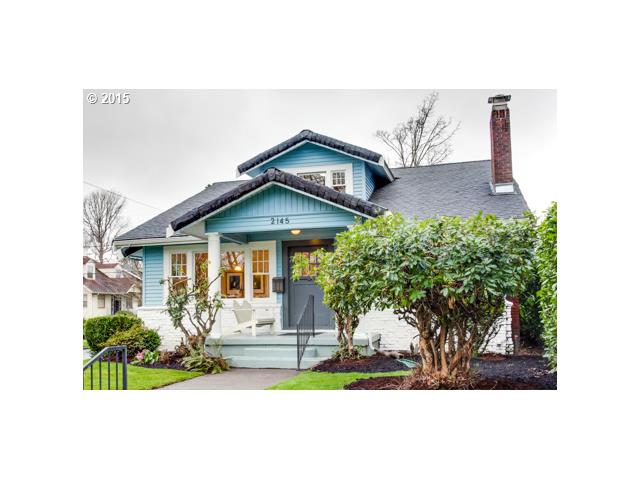
Ladd’s Addition — 2145 SE Ladd Ave.

$654,000 — 4 Bedrooms, 2 Baths — 2782 SF

Much bigger than it looks! Beautiful *bright* 1924 bungalow in historic Ladd’s Addition near Hawthorne & Division cafes. Stunning vintage built-ins. Lovely cherry wood kitchen w Silestone quartz countertops. Generous light shines through a multitude of windows. Possible art studio in shop/garage that has plumbing. Sunny yard. Possible sep living quarters. Park 2 cars off street. High-rated, high achieving schools.

Listed by: Laurie Sonnenfeld @ M Realty LLC

SOLD — 15 Days on Market

Hidden Gems: Artisan Foods of Portland

There’s an extra layer of pride when a local business achieves renown that extends beyond the shores of Portland. Not only are these artisans crafting their products here at home, but they’ll invite you inside to see how they do it and taste their wares firsthand.

  
Bob’s Red Mill

Employing time-honored techniques to quartz-grind their whole grains into an array of wholesome products, Bob’s Red Mill employees are as dedicated to quality as to each other. On Bob’s 81st birthday, he gave the company to his employees because “it was just the right thing to do.” Learn more about this remarkable organization on the factory tour at their world headquarters.

Their Whole Grain Store and Restaurant is open six days a week (closed Sundays) and serves hearty breakfasts, lunches and dinners.

  
Blue Star Donuts

Made from scratch throughout the day for maximum freshness, their donuts are always glazed to order. Blue Star prides itself on the highest in culinary standards and uses local, seasonal ingredients. There are no artificial flavors or preservatives and they have vegan options!

Check out their locations in Southeast, Southwest and North Portland.

  
Moonstruck Chocolate

Founded in Portland in 1993 on the principle that truly superior chocolates must be hand-crafted, Moonstruck still practices the same concept today. Their chocolates are designed to be not just a passing flavor but a memorable experience.

They have chocolate cafes on Alder, NW 23rd, in Pioneer Place and Beaverton. Check out the outlet store located in their factory to see how it’s all made!

Up Your Credit Score

Brent Lucas of Guild Mortgage, M Realty’s featured partner, prepared this helpful guide to boosting your credit score.

We all know that having a good credit score is important to our financial well-being and can open doors, such as allowing us to borrow money at favorable rates for homes, cars or college tuition for our children.

Understanding, though, doesn’t always lead to following the best practices and many of us make basic mistakes with our credit that can hurt our scores, according to a recent survey by the National Foundation for Credit Counseling (NFCC).

Fortunately, you can repair and improve your credit score if it has been damaged and the Guild Mortgage home gurus have found expert advice to help. It starts with knowing what you are up against, advises the NFCC. All U.S. consumers are entitled to a free copy of their credit report every year from each of the three credit reporting agencies, and these reports can be obtained at AnnualCreditReport.com. Look at your report and find out if there are any issues that you need to correct, such as late or missed payments.

If you do spot any errors on your credit report, dispute them with the credit reporting agencies, says Forbes.com. The three agencies are Equifax, Experian, and TransUnion, and all three offer online options for disputing erroneous entries on your credit report.

Negotiating with your creditors can also prove beneficial. For example, contact a credit card company and offer to pay your balance in full if they will report your debt as “paid as agreed,” or remove the late payment information from your credit file. Forbes.com advises getting this agreement in writing before you make the payment.

Another important step you can take is to set up automatic payment reminders for your bills, says myfico.com. That’s because payment history is one of the major factors used by the credit agencies in computing your credit score. You can take it a step further and be worry free about missing due dates by setting up automatic payments for your credit card bills, which will be deducted each month from your bank account.

Paying down your debt is also extremely important. Although this can be difficult to do, it is more manageable if you take it on a step-by-step basis. First, stop using your credit cards. Then, come up with a plan to pay the most on cards that charge the highest interest rate. Over time, you will see a marked reduction in your debt, which will make you feel proud of your progress while boosting your credit score.

If you are having trouble getting approved for credit because of your credit history, consider a co-signer for a loan or credit card. You will have to find someone willing to be equally responsible for any late or missed payments, which would damage their credit score as well. But if you use this opportunity responsibly, you can rebuild your credit score while also learning and establishing good credit habits. The biggest step, according to the experts: not borrowing more than you can afford to pay back, and making your payments on time.

Credit limits are also something to manage intelligently. Those who max out their credit cards can hurt their credit score. Keep your credit card balance at or below 35 percent of your credit limit, advises USAToday.com. Consumers with the best credit scores tend to use about 7 percent of their available credit, but 10 to 20 percent is within a safe range, says the website.

Finally, maintaining a diverse mix of different types of credit can boost your score. This could include a mortgage, home equity line of credit, auto loan or credit card. And of course, make the payments on time so you build a positive history!

By following these tips, even if your credit has taken a hit in the past, you can get back on the road to good financial health and use credit effectively.

If you’d like more information about preparing your credit score for home ownership, now is the perfect time to reach out to your favorite real estate agent to be connected with a financial professional like Brent.

Owning vs Renting

Does Your New Year’s Resolution Include Owning Your Home?

Brent Lucas of Guild Mortgage, M Realty’s featured partner, details the benefits of owning your home versus renting.

Nearly a third of households are still renting. If you’re one of them, you could be paying a hefty price.

Estimates for 2015 are soaring. Analysts predict that growth in rents will outpace home values in 2015 due to skyrocketing rental demand. The combination of young adults renting longer, more young adults moving to Portland, and families needing to rent after losing their home to foreclosure has increased the rental market demand… and with higher demand comes higher rental prices. In fact, renting may be COSTING you a bundle.

Let’s look at an example…

If you are paying rent at $1,500 per month and your landlord increases your payment by a modest 5% each year, you would wind up paying just about $100,000 over a 5-year period! Worse yet, after forking over $100,000, you still would have nothing to show for it.

And speaking of having nothing to show for it, how about any improvements you might make to a rental property? It’s not uncommon for renters to freshen up the paint, install new light fixtures or plant some nice flowers outside. But guess what… all your efforts, labor and the benefit of that improvement belong to the landlord, not to you.

With convenient  down payment options  still available for qualified buyers, affordable home prices and low interest rates, the very same money could have been used toward home ownership.

Even using a standard 30-year fixed program, a mortgage of $300,000 could be obtained with a total monthly mortgage payment-including property taxes and insurance-of around $2,200. Assuming a 25% tax bracket, after your tax benefit this would be equivalent to the average amount spent on rent during the same period.

And the benefits of home ownership are quite considerable. Because the mortgage is being paid down each month, equity is being built. After five years, the $300,000 mortgage could be reduced to $279,000, potentially adding $21,000 to your net worth!

But if laying out the initial increase in monthly payment and having to wait for your tax benefit to show up next April is a tough nut to crack, the IRS wants to help. Instead of waiting to file for the tax benefits derived from your new home purchase, you can simply adjust the amount of your withholding. This allows you to have less tax withheld from each paycheck so you can handle the new mortgage payment more comfortably throughout the year. In essence, you are taking your tax refund as you go instead of letting Uncle Sam hold it all year, interest free.

Visit www.irs.gov and use the IRS withholding calculator. This very handy tool can quickly show you the impact that a change in withholding will do to your net paycheck. Remember to balance this with the expected refund and it is always a good idea to check with your tax advisor.

Don’t fall victim to the national headline hype. Remember, buying a home is a big step, but it is almost always one in the right direction.

If you’d like to learn more about how home ownership might be the right fit for your current situation, now is the perfect time to reach out to your favorite real estate agent to be connected with a financial professional like Brent.

Donation Guide


Getting a fresh start in the New Year can mean finding a new home for some of the items that clutter our lives. Also, donation receipts are always a plus while preparing your taxes. Make your living rooms, kitchens, closets and garages more accessible and do a good deed in the process!

 
Community Warehouse
Accepts: furniture, kitchenware, basic household items, durable medical equipment
Drop-off Sites: NE Portland and Tualatin

 
William Temple House
Accepts: furniture, clothing, shoes, antiques, books, small appliances, clean bedding and linens, area rugs, holiday items
Drop-off Site: NW Portland (Tues, Wed, Thurs from 10am-3pm)

 
Portland Rescue Mission
Accepts: clothing, blankets, backpacks
Drop-off Sites: West Burnside and NE Portland

Modern Downpayment Options

Don’t Let Downpayment Size Stop You from Owning Your Home

Brent Lucas of Guild Mortgage, M Realty’s featured partner, offers some industry insight into the modern truth about downpayments…

2015 is projecting to be another strong year for U.S. housing. Home sales are rising, home supply is dropping, and prices are increasing in many of our cities and neighborhoods.

Furthermore, mortgage interest rates are down.

30-year mortgage rates are very near 4% nationwide and have fallen to their lowest levels since early-June 2013. Many lenders are also quoting FHA and VA rates that are as competitive as conventional loans.

Lower mortgage rates yield lower monthly mortgage payments for today’s home buyers. However, for many buyers, it’s not the monthly payment which makes thought of homeownership difficult — it’s the prospect of putting 20% down.

The good news is that, in today’s mortgage market, there are a myriad of mortgage programs requiring little or no money down.


Home Buyers Don’t Need To Put 20% Down

Buyers in today’s U.S. housing market don’t need 20 percent down. Many believe they do. This “20 Percent Down” misbelief may have been true at some point in history, but certainly not since the implementation of the FHA Loan, which occurred in 1934.

The likely reason why buyers believe a twenty percent downpayment is required is because, with a conventional mortgage, putting twenty percent down removes the need for private mortgage insurance.

Private mortgage insurance is an insurance policy homeowners are required to pay in order to protect a lender in the event of default. Mortgage insurance costs vary by downpayment and the borrower’s credit score.

Home buyers — especially first-time home buyers — will sometimes delay a purchase because they don’t feel as if they have enough money saved up for downpayment. And, while this should certainly be a consideration in homeownership, it should never be the only consideration.

Home affordability is not about how much money you can put down on a home. Home affordability is about whether you can afford the monthly payments that accompany owning a home.

A larger downpayment will result in a smaller loan size and, therefore, a smaller monthly mortgage payment. However, if you’ve depleted your life savings to make the purchase, perhaps the big downpayment was poor planning.

Here are some options for homebuyers to consider if they are wanting to take advantage of today’s home prices and historically low rates but do not have the 20% down:


FHA Mortgage : 3.5% Downpayment

The FHA mortgage is somewhat of a misnomer because the FHA doesn’t actually make loans. Rather, the FHA is an insurer of loans.

The FHA publishes a series of standards for the loans it will insure. When a bank underwrites and funds a loan which meets these specific guidelines, the FHA agrees to insure that loan against loss.

FHA mortgage guidelines are famous for their liberal approach to credit scores and downpayments. The FHA will typically insure a home loan for borrowers with low credit scores so long as there’s a reasonable explanation for the low FICO.

The FHA allows a downpayment of just 3.5 percent in all U.S. markets, with the exception of a few housing types.

(See FHA Flyer)

Furthermore, the FHA supports homeowners who have experienced recent short sales, foreclosures or bankruptcies through the agency’s Back To Work Program (http://backtoworkprogram.org); and will reduce its FHA mortgage insurance premiums for first-time buyers via the Homeowner’s Armed with Knowledge (HAWK) program.

The FHA insures loan sizes up to $362,250 in our 3 county area. To look up the FHA loan limits for one or more areas by state or county go to (https://entp.hud.gov/idapp/html/hicostlook.cfm)


My Community Mortgage (MCM) : 3% Downpayment

The Conventional 97 program has just NOW become available once again from Fannie Mae. It’s a 3 percent downpayment program and, for many 1st time home buyers, it’s a less-expensive option as compared to an FHA loan. (details will be released on this program this week)


VA Loan : No Money Down / 100% Financing

The Veteran’s Loan (VA) is a no-money-down program available to members of the U.S. military and surviving spouses.

Guaranteed by the U.S. Department of Veteran Affairs, VA loans are similar to FHA loans in that the agency guarantees repayment to lenders making loans which means VA mortgage guidelines.


VA loan qualifications are straight-forward.

In general, active duty and honorably discharged service personnel are eligible for the VA program. In addition, home buyers who have spent at least 6 years in the Reserves or National Guard are eligible, as are spouses of service members killed in the line of duty.

(See VA Flyer)


USDA Mortgage : No Money Down / 100% Financing

No Money Down options exist for non-military borrowers, too. The U.S. Department of Agriculture offers a 100% mortgage. The program is formally known as a Section 502 mortgage, but, more commonly, it’s called a Rural Housing Loan.

The good news about the USDA Rural Housing Loan is that it’s not just a “rural loan” — it’s available to buyers in suburban neighborhoods, too. The USDA’s goal is to reach “low-to-moderate income homebuyers”, wherever they may be.

(See USDA Flyer)

Another key benefit is that USDA mortgage rates are often lower than rates for comparable, low- or no-downpayment mortgages. Financing a home via the USDA can be the lowest cost means of homeownership.


National Homebuyers Fund: Downpayment Assistance

The NHF has released a program that provides a 3% or 5% forgivable grant for downpayment assistance

(See NHF Flyer)


Home Buyers Get Low Mortgage Rates

Not everyone will be eligible for today’s low-downpayment loans or grants, which is okay. The next-lowest downpayment loan comes from Fannie Mae and Freddie Mac and it requires just five percent down.

If you’d like to know more about current mortgage rate performance, now is the perfect time to reach out to your favorite real estate agent to be connected with a financial professional like Brent.

Give Thanks and Live Longer

This is the time of year when many of us feast with our loved ones and focus on thankfulness while we digest. Yes, giving thanks is a widespread annual tradition, but did you know it also has scientifically-proven positive side effects? Knowing that we’re happier and actually healthier when we express gratitude, it makes sense to actively pursue this more than once a year. And there’s an easy trick to doing it: building habits.

It is impossible for your brain to feel anger at the same time as gratitude. So if you catch yourself in a particularly resentful or stressed state, make that your trigger to list three things you’re thankful for, despite what you might be currently feeling. And nothing reinforces positivity like spreading it around. Getting into the routine of sharing three things you’re grateful for every day at a collective meal or on social media will prompt others to do the same (even if it’s just subconsciously).

If you’re ever having trouble finding something to be grateful for, look around for the simplest things we take for granted. For one, if you’re reading this, you’re alive. That’s a good start. Is the temperature controlled where you are? Can you flip a switch for instant light? Do you have virtually limitless access to clean drinking water? Once you take the time to appreciate the little things, you can build up to more complex expressions of gratitude. And every time you do this, you’re erasing stress–so it’s always beneficial. Jotting this thankfulness down in a journal before bed is proven to promote deeper sleep and even relieve chronic pain. It’s good for your heart, both figuratively and literally.

For a more extreme exercise in gratitude, check out the video below to see the kind people over at Soul Pancake conducting a fun experiment about gratitude’s effect on the happiness of some unsuspecting test subjects:

Hopefully this blog post prompts you add a little more gratitude into your life. Thank you so much for reading!

Our Heritage Trees

Visitors to the Northwest will often marvel at how green it is here. Magnificent trees will stretch their great boughs skyward, seemingly oblivious that they’ve taken root in a densely populated urban area. There’s a reason we’re so fortunate to have such amazing Portland trees: we protect them.

Nearly 300 “Heritage Trees” stand tall throughout Portland. Anyone can nominate a tree for this special status. Once granted, it becomes unlawful (without prior written consent) to remove, destroy, cut, prune, break or injure any designated Heritage Tree. Even trees on private property can be nominated with permission from the landowner and this consent binds all successors and heirs.


Burrell Elm
SW Main St and SW Jefferson St
American elm (Ulmus americana)
Height 78 ft
Spread 105 ft
Circumference 12.17 ft


Dutch Elm
1225 SW 6th Ave
Dutch elm (Ulmus x hollandica)
Height 105 ft
Spread 90 ft
Circumference 13.5 ft


Tulip Tree
1403 NE Weidler St
Tulip tree (Liriodendron tulipifera)
Height 72 ft
Spread 65 ft
Circumference 15.5 ft


White Oak
NW 23rd & NW Overton
Oregon white oak (Quercus garryana)
Height 80 ft
Spread 86 ft
Circumference 15.4 ft


Wych Elm
222 SE 17th Ave
Wych elm (Ulmus glabra)
Height 100 ft
Spread 60 ft
Circumference 14.9 ft

 
No matter where you are in the city, one of these proud trees likely lives nearby. Want to find an epic Heritage Tree? There’s a free iPhone app for that. You can learn more about it here.

There’s even a handy Portland Heritage Guidebook you can check out online or right-click and save for later viewing.

And for good measure, here’s an interactive map:

Get out there and explore Portland’s glorious Heritage Trees!

Mortgage Rates Explained

Brent Lucas of Guild Mortgage, M Realty’s featured partner, offers some industry insight into what drives Mortgage Rates.

“Should I Lock or Float?”

Locking in a good home loan rate weighs heavily on the minds of most homebuyers, and rightly so. Each fraction of a percent could represent huge savings over the life of a loan. Homebuyers are always eager for mortgage rate predictions, even if they know they’re seeking certainty in an arena of constant change.

So… why is it SO hard to nail down home loan rates?

The reality is that many factors influence home loan rates, and these factors are as significant as they are unpredictable. However, an experienced mortgage loan officer can assist you in identifying consistency and repetition in market shifts by watching what happens with the “Big 6” economic indicators (reflected below) and the daily performance of Mortgage Backed Securities (MBS).


If you’d like to know more about current mortgage rate performance, now is the perfect time to reach out to your favorite real estate agent to be connected with a financial professional like Brent.
Portland’s ADU Fever

Formerly known as a carriage house, granny flat, mother-in-law suite or English basement, today’s Accessory Dwelling Unit (ADU) is alive and thriving in Portland. Not only does it add versatility to the property in its ability to accommodate the needs of friends and family, but ADUs create significant income potential from both long-term and short-term renters.

$11,000 Building Permit Credit
With nearly seven times the number of ADUs built last year compared to 2010, we owe this surge to the City of Portland’s waiver of System Development Charges (worth up to $11,000 in building permit reductions). This waiver continues through July 2016 and has spurred an increasing number of home owners to segregate 200-800 square feet of their floor plan into a separate living space.

Property Owner Does Not Need to Live On-Site
Portland repealed its ADU owner occupancy provision so ADUs have grown in popularity for investment properties. Multiple sets of renters under the same roof can quite easily cause a rental to pencil out as a profitable business opportunity.

Popular Websites Make Booking Short-Term Renters a Snap
Instead of the income generated by a full-time renter, websites like www.airbnb.com connect home owners with travelers seeking bed and breakfast style accommodations. This allows an ADU (or even just an extra room) to function as a fun and profitable hotel alternative.


For more helpful information about creating your own ADU, check out the City of Portland’s Guide.

Urban Birds and Bees


Living in an urban area doesn’t mean you can’t have local honey and fresh eggs. It just means you can support a local business and maybe invite some new feathered friends into your backyard. Watch this informational video and then check out the full scoop on the birds and the bees below!
 

Bees – Rooftop Urban Hives by

Bee Local


After pollenating Portland’s flora and promoting the local ecosystem, Bee Local’s honey-makers buzz up to the tops of key buildings downtown to do what they do best. Each hive can cover a radius of over a mile, bringing back the neighborhood’s pollen to craft their own special variety of honey. In addition to its inherent deliciousness, a daily dose of honey can alleviate symptoms of seasonal allergies and motivated folk will employ ancient techniques to make mead or “honey wine.”

If you want to get your paws on this amazing local honey, check out Bee Local’s online store. Honey is a fantastic gift (for yourself and others) so visit the site periodically because the varieties change as the season progresses!

So the next time you’re downtown and spot a bee beating its wings up toward a building, you can smile to yourself because you’ll know where she’s headed.


Chickens – Your Backyard Barnyard

Before you get distracted by all the awesome benefits of owning chickens, let it first be known: chickens make great pets. Just hanging out with your chickens in the backyard while enjoying a refreshing beverage is a recipe for relaxation.

In addition, most hens will provide you with omelet ingredients every one to three days. And these fresh, free-range eggs are proven to be higher in vitamins and lower in cholesterol and saturated fat.

Also, chickens are enthusiastic gardeners. They’ll happily clear a vegetable garden after harvest, scratching out slugs and weeds and yes, fertilize the soil for good measure. If you have fruit trees, chickens will clear away the fallen produce before it attracts insects.

You might say that backyard chickens are the bee’s knees!

For information on the types and quantity animals the City of Portland allows you to keep at your residence before you need a permit, check out this FAQ on backyard animals.

Save by Recasting Your Loan


Seeking the inside scoop on all things financial, we reached out to M Realty’s preferred lending partner, Guild Mortgage’s Brent Lucas, to get the details on loan recasting:

Refinancing your home loan can be expensive. Depending on your situation, recasting your loan lowers your monthly payments while offering several advantages.

What is recasting?

You apply a lump sum payment to your loan to lower your monthly payments without changing your interest rate or term of the loan.

Advantages

> No Appraisal Required
> No Credit Check
> Interest Rate Stays Locked
> Recasting Generally Costs Under $400

When to Recast

When there are multiple offers on a home, contingent offers (where the offer is contingent on the sale of the buyers’ current home) are weaker than traditional offers. Buyers in this situation will often raise their contingent offers by several thousand dollars to make it more attractive.

If the buyers instead took out a separate loan for their new home, they could make a stronger offer without raising it substantially. Then they could sell their original home and recast the loan on their new home with a substantial lump sum payment. In this case, they would have saved potential thousands of dollars by not making a contingent offer and avoided additional thousands in refinancing costs.

In Conclusion

While not perfect in every situation, it’s important to know the advantages of loan recasting when making decisions as a home owner. Used strategically, recasting your loan instead of refinancing can save you thousands.

If you’d like to know more about the specific eligibility requirements for loan recasting, now is the perfect time to reach out to your favorite real estate agent to be connected with a financial professional like Brent.

Keep Portland’s Older Homes

I hosted a strategy meeting at People’s Co-op, SE 21st and Tibbetts in June 2014. We brainstormed solutions and strategies and d how we want the process of housing demolitions to change to protect neighborhood livability,

housing affordability, solar access and more. And don’t forget the environmental impacts of housing demolition. Too many good older homes are being destroyed in our inner city neighborhoods.

Here are some important links for information on this issue:

Demolition Delay and Notification Information

Architectural Heritage Center Blog with overview and proposed strategies

SE Uplift Demolition resources page, including video and very good info from the June 11 conference at Concordia